
SMS Activate Alternatives: A Guide to Choosing and Setting Up Virtual Number Services
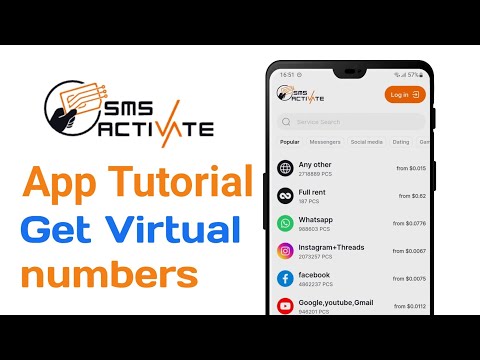
In the digital landscape of 2026, the need for secure and reliable verification methods has never been higher. Whether you are managing multiple social media accounts, testing applications, or protecting your personal privacy, SMS verification services have become a staple for developers and digital marketers alike. Understanding how to utilize platforms like SMS Activate effectively or navigating the available options for your specific workflow is a critical skill for maintaining online security and operational efficiency. This guide covers the essentials of setup, onboarding, and selecting the right tools for your business needs.
Understanding SMS Verification Services
SMS verification services are designed to address the growing demand for secondary phone numbers that can receive activation codes from various online platforms. At their core, these services provide temporary or long-term virtual numbers that allow users to register for accounts without exposing their private personal mobile numbers. By decoupling your identity from your online activity, you gain a layer of privacy that is essential in an era where data harvesting and digital footprint tracking are increasingly prevalent. For businesses, these services are often used to manage multiple accounts for social media management, market research, or quality assurance testing.
Beyond privacy, these services serve as a bridge for global connectivity. Many platforms restrict registrations to specific geographic regions; virtual numbers allow users to bypass these limitations by providing a mobile number from the required country. This functionality is invaluable for international digital marketing strategies, enabling teams to verify accounts as if they were physically located in the target market. When choosing a service, it is important to consider the breadth of country coverage and the availability of specific mobile network providers, as some platforms have strict requirements regarding the type of numbers they accept for registration.
Getting Started with SMS Activate
Setting up your account on SMS Activate is a straightforward process designed to minimize friction for new users. The initial step involves creating an account, which typically requires a verified email address. Once the account is established, users must deposit funds into their wallet. Because these services operate on a pay-per-use model, having a sufficient balance is necessary to initiate requests for virtual numbers. The dashboard is generally intuitive, allowing users to browse through a list of available countries and services, ranging from popular social media apps to niche communication platforms.
After navigating the dashboard, the process of receiving a code involves selecting the country and the service you are attempting to register for. Once the selection is made, the platform provides you with a virtual number intended for a single use. You then input this number into the external website or application that requires SMS verification. Once the SMS is sent by the third-party service, the code appears in your SMS Activate dashboard. It is essential to be ready to act quickly, as these numbers are usually active for only a limited amount of time before they expire or are recycled for other users.
Evaluating Key Features and Reliability
When selecting a service, reliability is the primary metric to evaluate. A service is only as good as its ability to actually receive an SMS and deliver the verification code in a timely manner. Downtime or delays can lead to failed registrations, costing you time and money. Look for platforms that offer transparency regarding their success rates and provide active support if a code is not received. Reliable providers often maintain a vast pool of numbers, ensuring that you are not frequently hit with errors stating that the number has already been used on a specific platform.
User interface quality and API availability are also significant factors. An efficient dashboard should allow for quick filtering by country, carrier, and service type. If you are a developer looking to integrate these services into your own applications, search for robust API documentation. The ability to programmatically request a number, receive a code, and complete a registration automatically is what separates professional-grade services from amateur solutions. Security is another key feature to consider; a reputable platform should handle your payment information and interaction data with standard encryption and privacy protections.
Comparing Available Solutions
The market for virtual numbers is crowded, and choosing the right one requires careful comparison. If you find yourself researching SMS activate alternatives, you will quickly realize that each platform has its own strengths and weaknesses. Some prioritize low costs per activation, while others focus on providing high-quality, long-term numbers that can sustain multiple verification requests over time. It is helpful to consider the specific nature of your business needs when evaluating these options. A small-scale operation might prioritize price, while an enterprise-level automation project might prioritize uptime and API stability.
| Feature | Starter Services | Professional Services |
|---|---|---|
| API Availability | Limited or None | Full REST API |
| Number Variety | General Pool | Specific Carriers |
| Support Speed | Basic Email | Dedicated Account Manager |
| Retention Time | Temporary Only | Renewable Numbers |
When comparing platforms, look for those that provide clearly defined documentation and a responsive support team. The ability to scale your operations is also a factor; check whether the platform allows for bulk requests or if they offer dedicated numbers that you can rent for longer periods to facilitate multi-step verifications or ongoing access to specific services. Reviewing user feedback on independent platforms can often highlight hidden issues like sluggish support, frequent API timeouts, or limited geographic coverage that may not be apparent during the initial sign-up process.
Best Practices for API Integration
Automating your SMS verification workflow is the most effective way to scale, but it requires a disciplined approach to API development. Start by implementing robust error handling in your code. Since virtual number services rely on external telecom infrastructure, interruptions are bound to occur. Your application should be designed to handle scenarios where a number is unavailable, a message is delayed, or a code is not received. Exponential backoff strategies or logic that automatically rotates through providers can significantly improve the success rate of your automated verification sequences.
Another best practice is to store and manage your credentials securely. Never hard-code your API keys directly into your deployment scripts. Use environment variables or secret management tools to ensure that your access tokens remain protected. Additionally, keep a detailed log of every transaction. Tracking which requests fail and why, while monitoring the health of your usage quotas, will help you identify bottlenecks and optimize your workflows. Regular auditing of your integration is important, as the API endpoints of service providers can change over time, and failing to update your code will lead to service disruptions.
Security Considerations for Virtual Numbers
While virtual numbers provide a necessary barrier for privacy, they do not inherently provide the same level of security as a primary, verified identity. Because these numbers are often shared or recycled, there is an inherent risk that an account could be recovered or compromised if the original virtual number is later assigned to another user. If you are using these numbers to register for accounts that hold sensitive financial information or personal data, you should understand the limitations of the security they provide and consider using them only for verifying identity, not for long-term account recovery.
Always prioritize two-factor authentication (2FA) methods that do not rely on SMS. Using authenticator apps, hardware keys, or backup codes is significantly more secure than relying on SMS verification for your primary accounts. Treat virtual numbers as a utility for the initial registration phase rather than a permanent security anchor. By keeping this distinction clear in your mind, you can effectively use these services to manage your digital footprint without creating unnecessary vulnerabilities in your online security posture.
Optimizing Your Workflow with Automation
Automation is the key to managing high-volume account creation or verification tasks. Rather than manually copying and pasting codes from a browser dashboard, integrated scripts can listen to the API response directly and automatically feed the code into your registration form. This transition turns a labor-intensive process into a lights-out operation. Many power users utilize custom Python or Node.js scripts to manage the lifecycle of a request, from initial purchase and number retrieval to polling for the SMS event and completing the account validation.
To optimize for speed, focus on reducing latency between your infrastructure and the service provider. Placing your server instances in geographic proximity to where the provider hosts their API can sometimes shave milliseconds off the handshake, which can be critical when working with platforms that have strict time-sensitive windows for inputting a verification code. Furthermore, be mindful of rate limits. Hammering an API with too many requests in a short window can lead to temporary IP bans or the throttling of your account. Implement rate limiting on your side to stay well within the service provider’s allowed frequency.
Managing Costs and Scalability
Effective budget management for SMS services involves understanding your unit costs and optimizing your usage patterns. Since most services charge on a per-SMS basis, unused numbers or abandoned requests represent direct financial waste. Monitor your usage trends to identify which services or countries are prone to high failure rates and adjust your strategy accordingly. If you find your costs climbing, consider negotiating bulk packages or looking into long-term rentals for services where you need consistent access to the same number over an extended period. This can sometimes be cheaper than repeatedly renting temporary numbers for the same platform.
Scalability is not just about spending more money; it is about infrastructure capacity. As your demand for verifications grows, your verification logic must be able to handle concurrent requests without collapsing. Using message queues or microservices for handling SMS event processing can help you distribute the load and ensure that critical validations are never lost in the shuffle. By treating your SMS verification workflow as a data pipeline rather than a series of one-off tasks, you create a robust, scalable system capable of supporting your business growth well into the future.
For those interested in exploring further, there are many resources available to help you compare the diverse landscape of providers. You can find more information about sms activate alternatives to ensure you are choosing a solution aligned with your technical requirements and budget. Staying informed about the latest trends in the industry will ultimately serve your goal of maintaining a secure and efficient digital workflow.